The Rare Rock Iguana of San Salvador
There are a few of them in the wild, but they are a rare sight on San Salvador
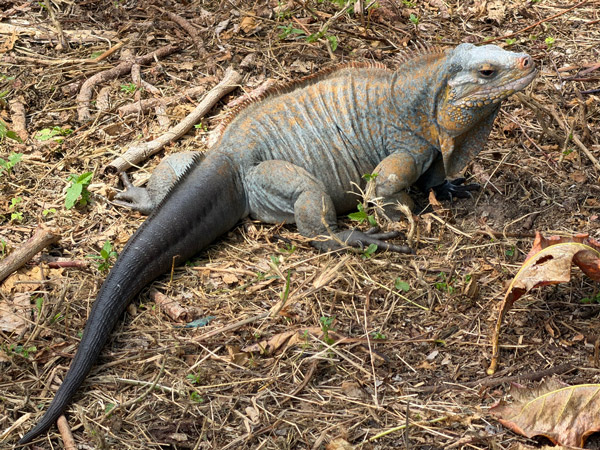
On the quiet shores and rocky cays surrounding San Salvador Island in the Bahamas, one of the Caribbean’s rarest reptiles still survives — the San Salvador Rock Iguana (Cyclura rileyi rileyi). Few visitors realize that these colorful lizards belong to one of the most endangered iguana species in the world, found nowhere else but in a handful of small Bahamian islands. For those lucky enough to spot one basking on a sun-warmed rock, it is a glimpse into a much older Bahamas — a landscape where wildlife still rules the limestone coastlines and wind-shaped shrubs.
The True Bahamian Miniature Dinosaurs
The San Salvador rock iguana is a subspecies of the Central Bahamian Rock Iguana, a reptile that evolved only in the Bahamas. Isolated populations developed on different islands over thousands of years, creating unique local forms. The San Salvador iguana is perhaps the most colorful of them all. Males in particular can display striking shades of orange, rust red, olive green, turquoise or slate gray. Their thick bodies, powerful legs, and spiny ridge along the back give them a prehistoric appearance — like miniature dinosaurs sunning themselves on the coastal rocks. From nose to tail base, adults typically measure about 12–15 inches, though the long tail makes them appear much larger. They live north on the island and are also found in Snow Bay and on High Cay on the southeastern side of San Salvador.
What Rock Iguanas Eat
Unlike many reptiles, these iguanas are primarily vegetarians. Their diet consists mainly of:
- * leaves
- * flowers
- * berries
- * cactus fruit
- * young shoots of coastal plants
Occasionally they may eat insects or other small animals, but plants make up the vast majority of their diet. In doing so, rock iguanas play an important ecological role. By eating fruit and moving through the landscape, they spread seeds across the island, helping native plants reproduce.
Why They Are So Rare
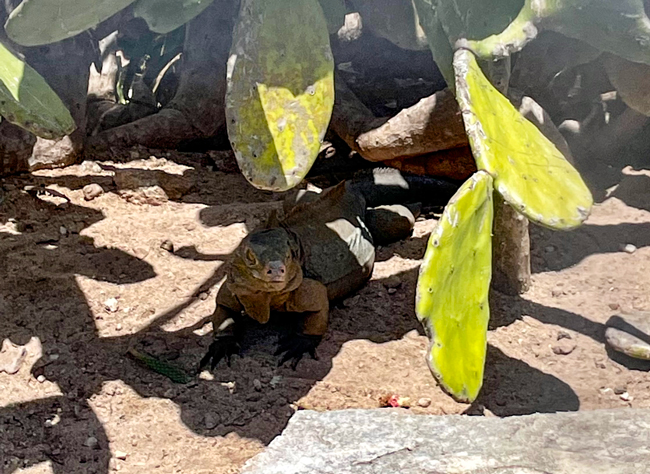
Sadly, the San Salvador rock iguana is now considered critically endangered. Several factors have reduced their numbers over time:
- * Introduced predators such as cats, dogs, and rats
- * Habitat disturbance from development
- * Eggs destroyed by feral animals
- * Human interference or illegal collecting
Because of these threats, many of the remaining iguanas survive mainly on small offshore cays, where predators are fewer and human disturbance is minimal. Conservation groups and the Bahamian government continue to monitor and protect the remaining populations.
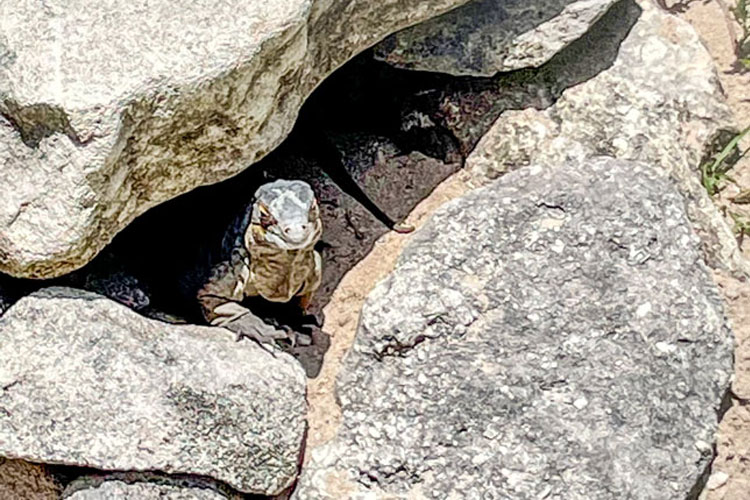
Life Among Limestone and Sea Grape
Rock iguanas prefer the dry coastal habitats typical of the Bahamian Out Islands. Around San Salvador they are most often found in areas with:
- * rocky limestone outcrops
- * low coastal coppice forest
- * scrub vegetation
- * sandy or rocky offshore cays
These habitats provide both food and protection. Iguanas spend much of the day basking in the sun to warm their bodies, then retreat quickly into rock crevices or burrows if disturbed. Despite their heavy appearance, they can run surprisingly fast when they need to.
A Special Sight on San Salvador
For residents and visitors alike, seeing a rock iguana in the wild is always memorable. You may notice them:
- • motionless on a warm rock in the morning sun
- • slowly moving through sea grape and low shrubs
- • raising and lowering their heads in territorial displays
They are generally shy animals and will retreat quickly if approached. These iguanas are fully protected by Bahamian law, and observing them from a respectful distance helps ensure their survival.
A Hidden Treasure of the Island
San Salvador is famous for its beaches, turquoise waters, and world-class fishing. Yet its wildlife is just as remarkable. The San Salvador rock iguana is a reminder that these islands still hold rare natural treasures — creatures that have lived here long before modern settlements appeared along the coast. If you are exploring the island’s quieter shorelines or visiting the nearby cays, keep an eye on the limestone rocks in the morning sun. You might just spot one of the Bahamas’ rarest residents basking peacefully in its ancient island home.
Conservation Efforts
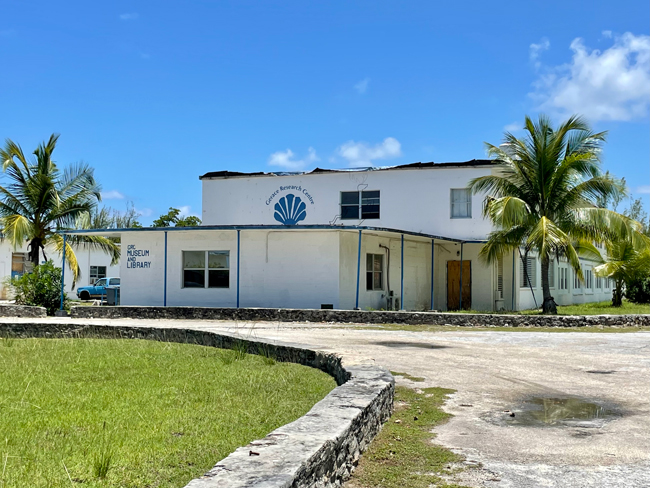
The Gerace Research Center in San Salvador is home to a population of rock iguana endemic to San Salvador. These iguanas are running free on the property of the Research Center. The Center was established in May 2012 for the conservation of the then estimated population of 500 iguanas. Wild populations of San Salvador iguanas are known to be spread across a few small uninhabited outer cays and tiny islets found in inland lakes. They are also seen in Snow Bay, on the south eastern side of the island. The Rock iguanas of The Bahamas are all protected by the Wild Animal (Protection) Act of 1968, making it illegal to harm, capture or export them.
Interesting Facts about the Bahamian Rock Iguana
- * Vegetarian
- * Take 6-9 years to reach sexual maturity
- * Are between 2-3 feet in length
- * Lay 3-12 eggs in shallow sand which hatch around 12 weeks later
- * Can live to be 40 years old
- * Use to be eaten by early inhabitants of the islands
- * Can also be found in Exuma, Andros, Acklins and Mayaguana
- * Rock iguanas can voluntarily sever their tail to distractor predators. This self-defense mechanism is called autotomy.